
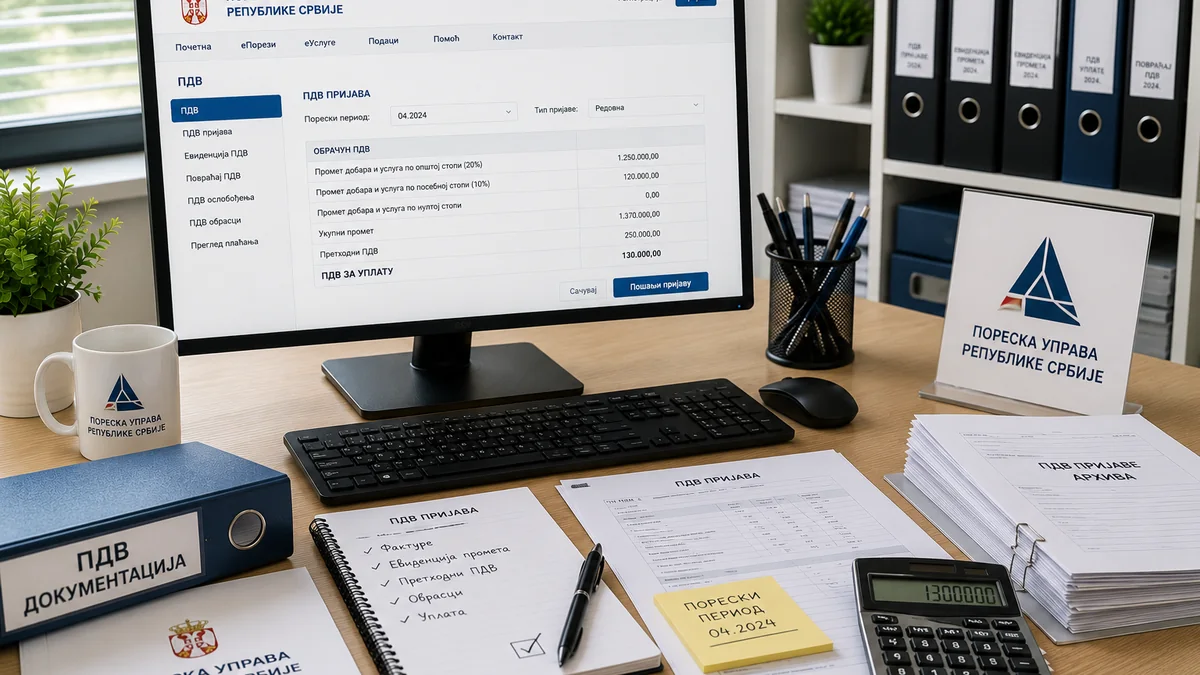
A practical AS LEGATT guide for Serbian businesses, with clear responsibilities, controls, documentation requirements and risk-prevention steps. This guide explains how to organise responsibilities, documentation and internal controls so that compliance supports, rather than interrupts, day-to-day operations.
Understanding the VAT cycle
VAT compliance begins with the date of supply, the invoice and reliable records. Businesses should not wait until the filing deadline to determine the tax treatment of transactions.
A practical procedure should specify who prepares the data, who reviews it, who authorises the final action and where evidence is stored. Internal deadlines should be earlier than statutory deadlines, and exceptions should be documented rather than handled informally.
- Assign a responsible person and a backup.
- Use a short control checklist before submission or payment.
- Reconcile records with an independent source.
- Keep proof of approval, submission and payment.
Input invoices and deduction rights
Every input invoice should be reviewed for business purpose, mandatory elements and the conditions for deducting input VAT. Payment alone does not automatically create a deduction right.
A practical procedure should specify who prepares the data, who reviews it, who authorises the final action and where evidence is stored. Internal deadlines should be earlier than statutory deadlines, and exceptions should be documented rather than handled informally.
- Assign a responsible person and a backup.
- Use a short control checklist before submission or payment.
- Reconcile records with an independent source.
- Keep proof of approval, submission and payment.
Output invoices and corrections
The tax treatment should be checked before an invoice is issued. Credit notes, advances and corrections must be linked to the original transaction and recorded consistently.
A practical procedure should specify who prepares the data, who reviews it, who authorises the final action and where evidence is stored. Internal deadlines should be earlier than statutory deadlines, and exceptions should be documented rather than handled informally.
- Assign a responsible person and a backup.
- Use a short control checklist before submission or payment.
- Reconcile records with an independent source.
- Keep proof of approval, submission and payment.
Monthly reconciliation
Sales, purchases, SEF records, bank data and the general ledger should be reconciled before the return is submitted.
A practical procedure should specify who prepares the data, who reviews it, who authorises the final action and where evidence is stored. Internal deadlines should be earlier than statutory deadlines, and exceptions should be documented rather than handled informally.
- Assign a responsible person and a backup.
- Use a short control checklist before submission or payment.
- Reconcile records with an independent source.
- Keep proof of approval, submission and payment.
Liquidity planning
VAT may become payable before a customer pays the invoice, so cash-flow planning should include a separate tax reserve.
A practical procedure should specify who prepares the data, who reviews it, who authorises the final action and where evidence is stored. Internal deadlines should be earlier than statutory deadlines, and exceptions should be documented rather than handled informally.
- Assign a responsible person and a backup.
- Use a short control checklist before submission or payment.
- Reconcile records with an independent source.
- Keep proof of approval, submission and payment.
Common risk areas
Late documents, incorrect tax periods, undocumented corrections and reliance on a single system are frequent causes of errors.
A practical procedure should specify who prepares the data, who reviews it, who authorises the final action and where evidence is stored. Internal deadlines should be earlier than statutory deadlines, and exceptions should be documented rather than handled informally.
- Assign a responsible person and a backup.
- Use a short control checklist before submission or payment.
- Reconcile records with an independent source.
- Keep proof of approval, submission and payment.
How AS LEGATT can help
AS LEGATT helps clients connect accounting, tax, administration and internal processes into one transparent system. Support is adapted to the company’s size, activity and existing way of working—from a review of a specific issue to implementation of procedures and recurring controls.