Well-organised business documentation allows a company to show what happened, who made a decision, which document created an obligation and how the transaction was recorded. A reliable system reduces errors, speeds up accounting work and makes tax, employment and internal reviews easier.
What does business documentation include?
There is no single folder that represents all company documentation. Records arise through different business processes and should be connected in a clear, searchable system.
- Corporate and registration records – incorporation documents, registrations, decisions and changes to registered data.
- Accounting and financial records – invoices, bank statements, calculations, orders, inventories and supporting documents.
- Tax documentation – returns, records, calculations and evidence supporting the tax treatment of transactions.
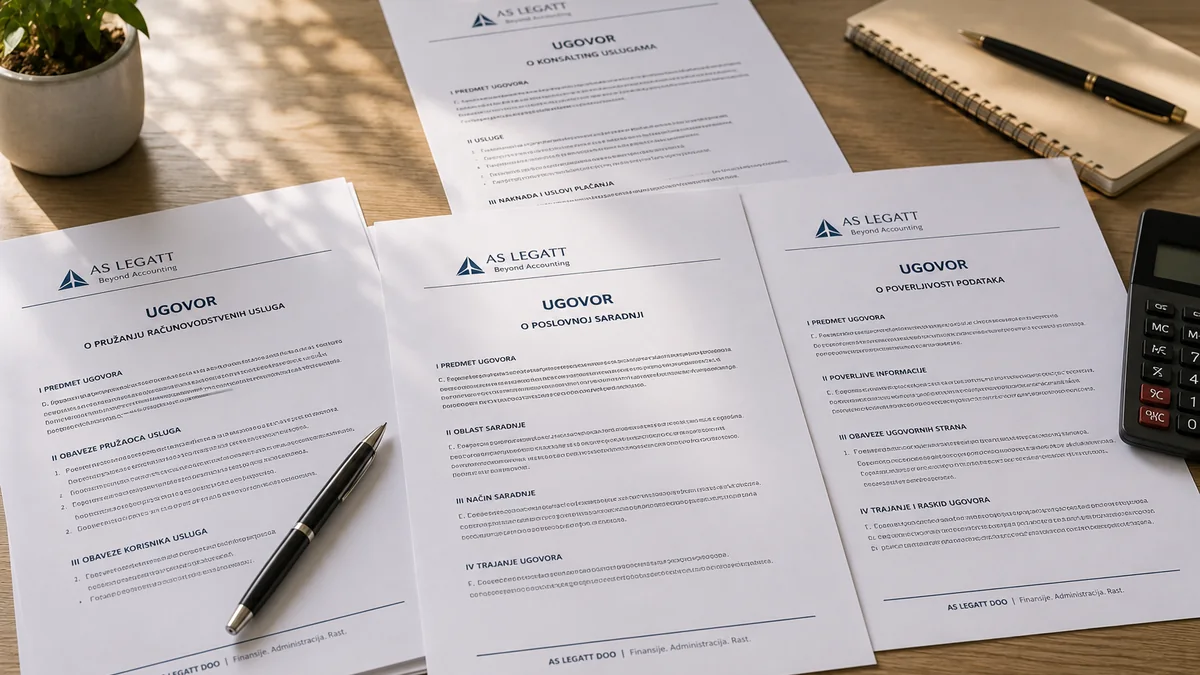
- Contract documentation – contracts, annexes, offers, purchase orders, minutes and evidence of performance.
- HR documentation – employment contracts, employment decisions, records, registrations and other employee documents.
Documentation should follow the business transaction
An invoice alone is often not the complete documentary trail. A purchase, for example, may need a clear link from the order and agreed terms, through receipt of goods or services, to the invoice, approval and payment. The more complex or material the transaction, the more important it is that the documentation demonstrates its business purpose and approval path.
Who receives, checks and approves a document?
A common problem is not the absence of a document but unclear responsibility. The company should define who receives it, who checks its contents, who confirms that goods or services were actually received, who approves the cost and when the document is sent to accounting. This prevents invoices from remaining in an employee's private inbox or payments being made without adequate support.
Contracts, annexes and deadlines
Active contracts should be tracked with their signing date, validity period, deadlines, responsible person and information about amendments. Contracts should be linked to invoices, deliveries and other documents generated through performance. This makes it easier to verify whether invoicing and payment correspond to what was actually agreed.
Digital documentation and archives
A digital archive is more than scanned paper. It requires rules for file names, folder structure, access rights, document versions, backups and retrieval. Electronic and paper documentation should be organised according to the type of document and the rules that apply to it.
Avoid keeping several parallel “final” versions of the same document. Where documents are revised, clearly identify the version or amendment date and retain an approval trail.
Documents accounting should receive on time
Accounting can record a transaction correctly only when it receives complete and understandable documentation. Internal procedures should therefore define when purchase and sales invoices, bank records, contracts, decisions, calculations, employee documentation and other records affecting accounting and tax obligations must be delivered.
Common business-documentation mistakes
- A document remains only in one employee's email account.
- It is unclear which version of a contract or decision is final.
- An invoice is not linked to the contract, purchase order or evidence of performance.
- There is no record of who approved the cost or payment.
- Accounting receives documents after an internal or statutory deadline.
- The digital archive has inconsistent naming, access controls or backups.
- A change of responsible employee results in part of the documentation being lost.
Practical checklist
- List the main categories of documents used by the company.
- Assign an owner and storage location for each category.
- Define who checks and who approves each document.
- Connect contracts, invoices, deliveries and payments.
- Use consistent naming and version rules for digital files.
- Set internal deadlines for sending documentation to accounting.
- Periodically test whether a document can be found quickly and linked to the underlying transaction.
How AS LEGATT can help
AS LEGATT helps businesses organise documentation flows, accounting hand-offs and internal controls so that records are easier to manage, review and use in day-to-day operations.